


Palm Bay, FL -- The construction boom that reshaped Palm Bay’s neighborhoods, taxed its roads, and strained its water and sewer systems has been cooling off since mid-2024. The Palm Bayer analyzed 39,187 building permits pulled from the city’s Integrated Management System (IMS) between March 2024 and March 2026. The data tells a clear story: permits peaked in May 2024 and have been falling since, with the most recent 12-month period posting 8.9% fewer permits than the same period a year earlier.
That slowdown has real consequences for city finances, infrastructure planning, and the pace of development in your neighborhood.
The Peak and the Drop
In May 2024, Palm Bay processed 1,882 permits in a single month. That was the high-water mark. By December 2025, that number had fallen to 1,255, a decline of 33.3% from peak to trough.
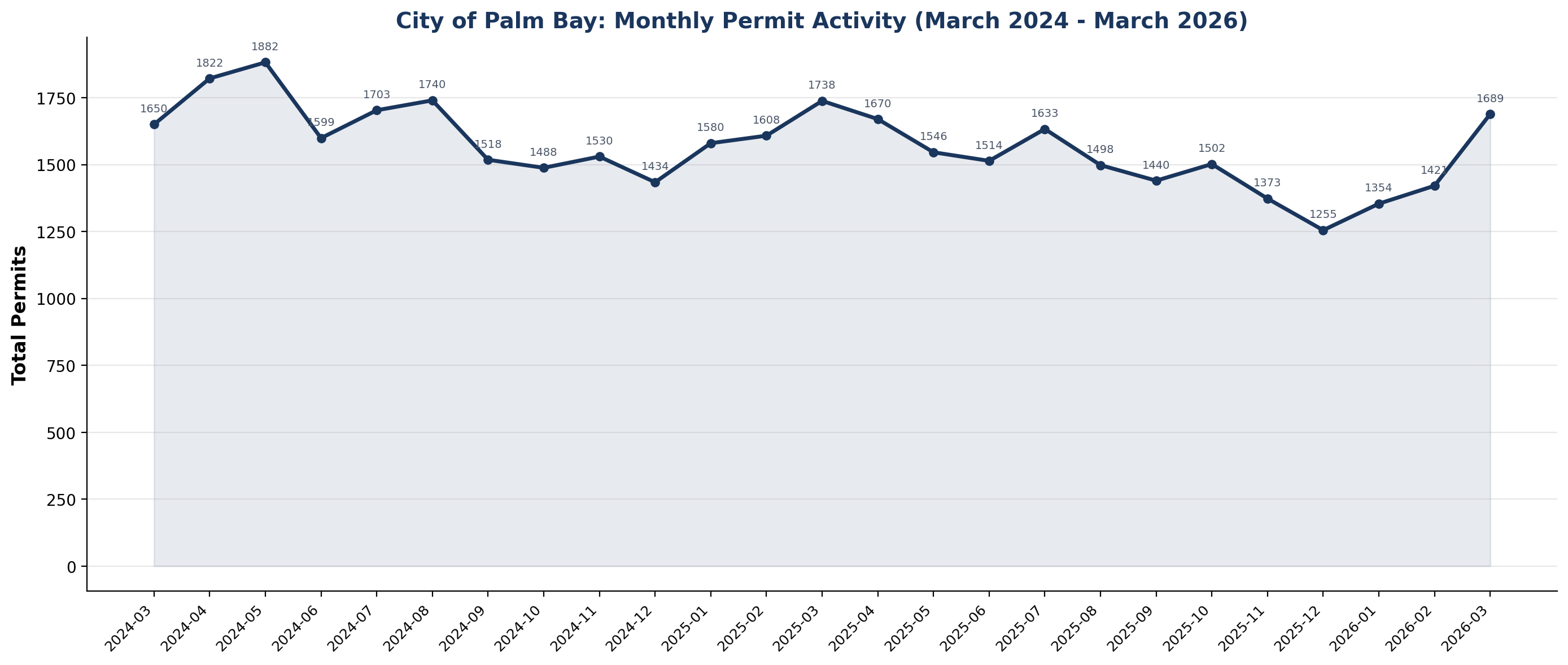
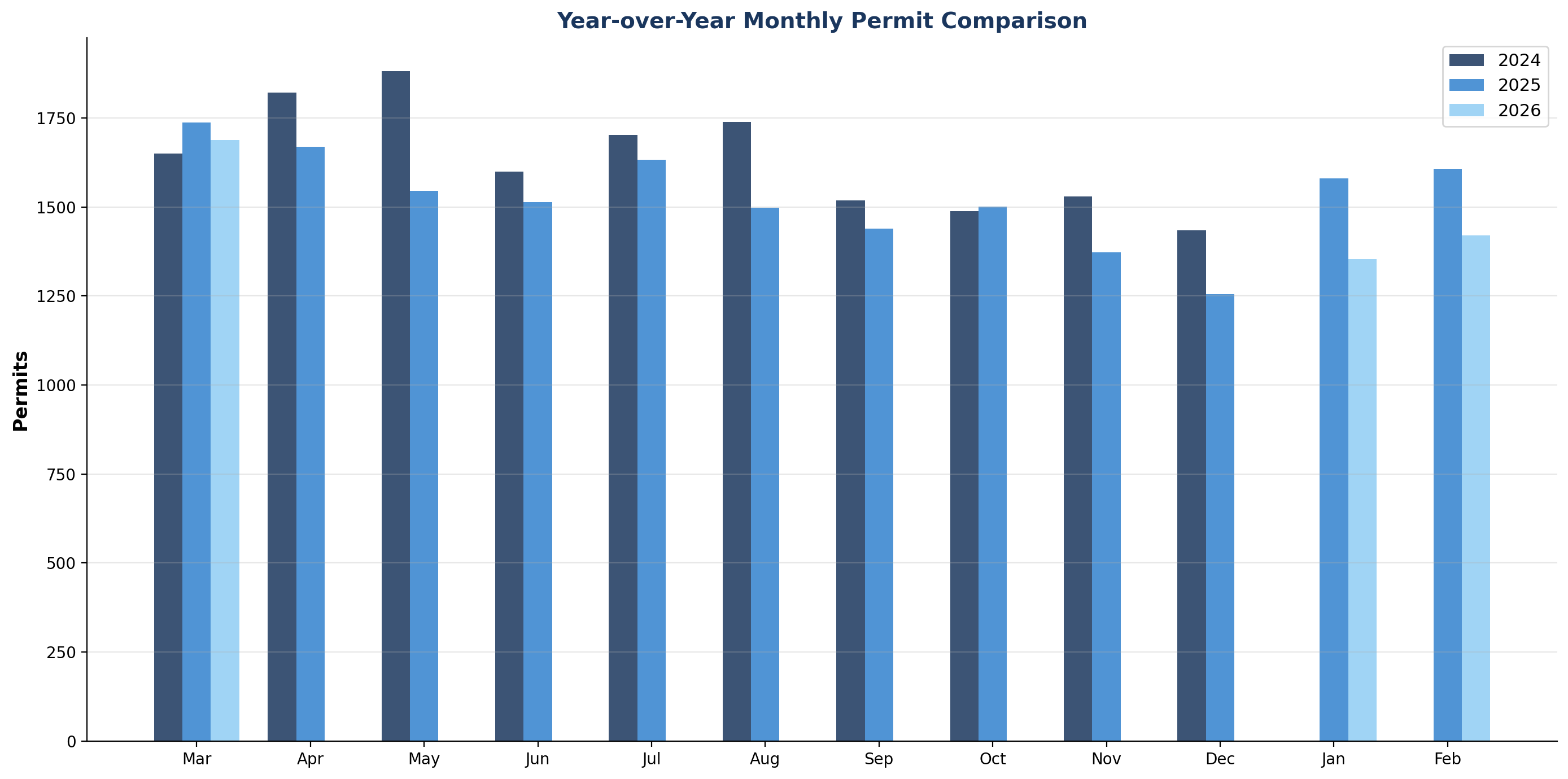
The city has since shown signs of leveling off. March 2026 came in at 1,689 permits, only 2.8% below the same month in 2025. But zoom out and the trend is still down: 11 of 13 comparable months in the dataset show year-over-year declines.
Comparing matched 12-month periods tells the story plainly. April 2024 through March 2025 produced 19,642 permits. The same period one year later, April 2025 through March 2026, produced 17,895. That is an 8.9% decline across a full year of data. Permit fees, impact fees, and the downstream tax revenue from completed construction all follow the permit count. When that number drops, the city’s budget feels it.
What’s Being Built (and What Isn’t)
Not every permit category moved the same direction.
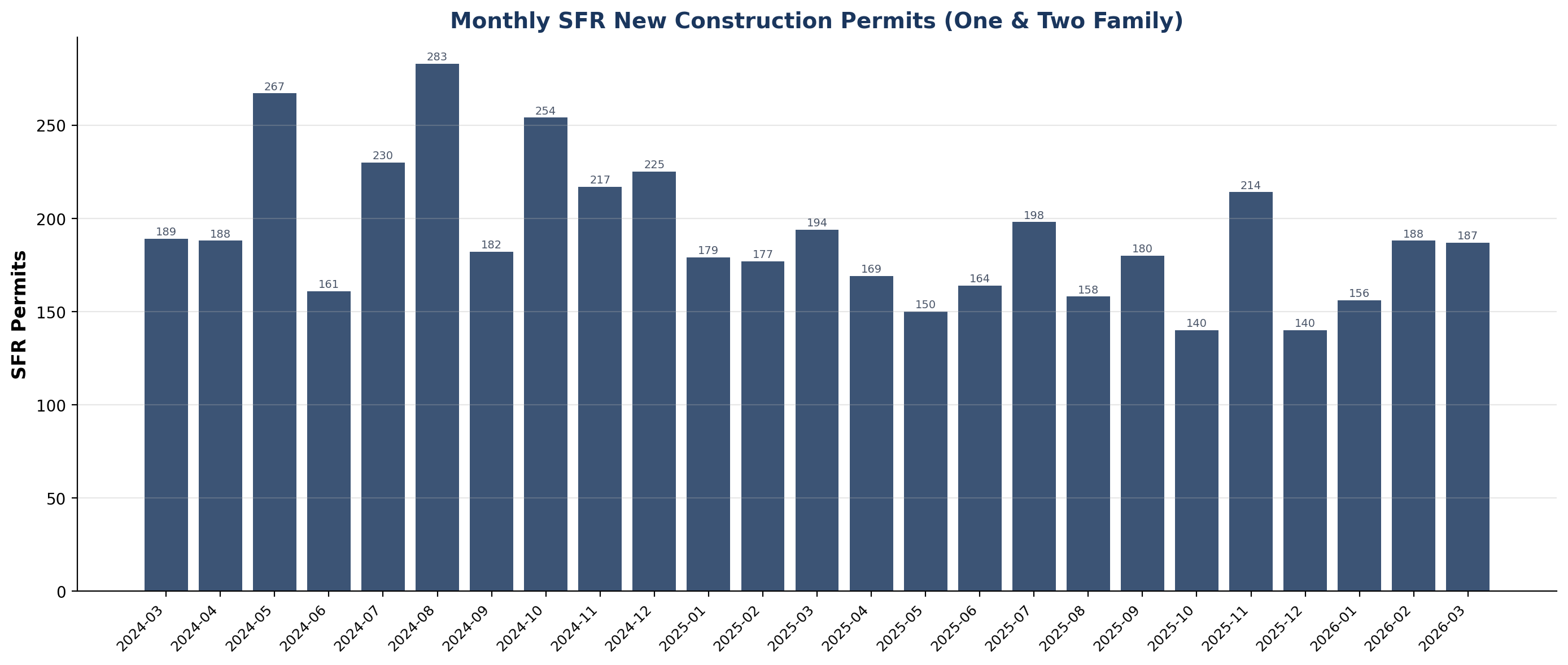
Residential building permits fell 14.1% over the analysis period. Single-family new construction, the driver of Palm Bay’s growth story for the past decade, peaked at 283 permits in August 2024 and dropped to 140 in December 2025. Over the full 25 months, 4,774 single-family residential permits were pulled. The trajectory since August 2024 has been consistently down.
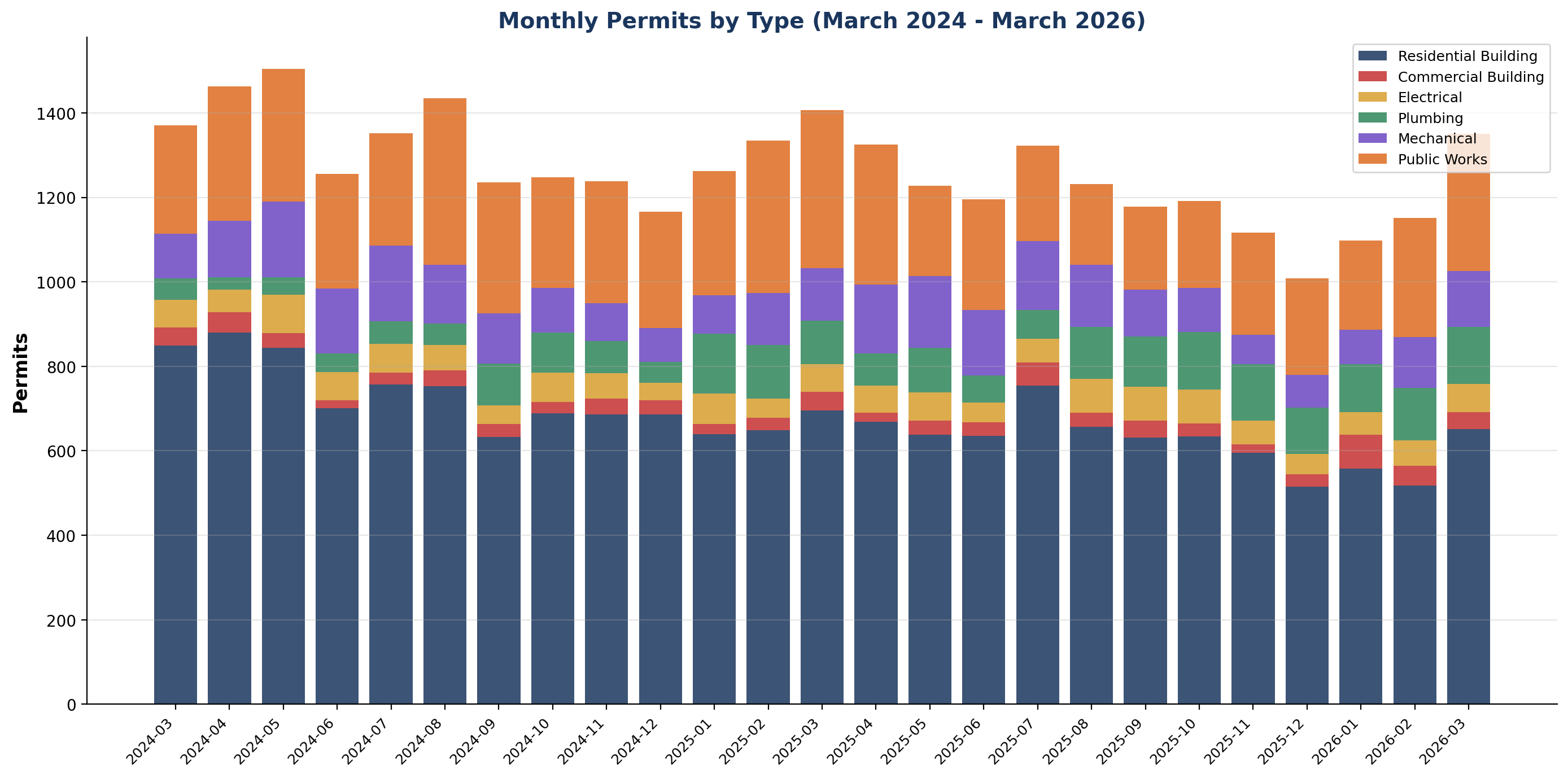
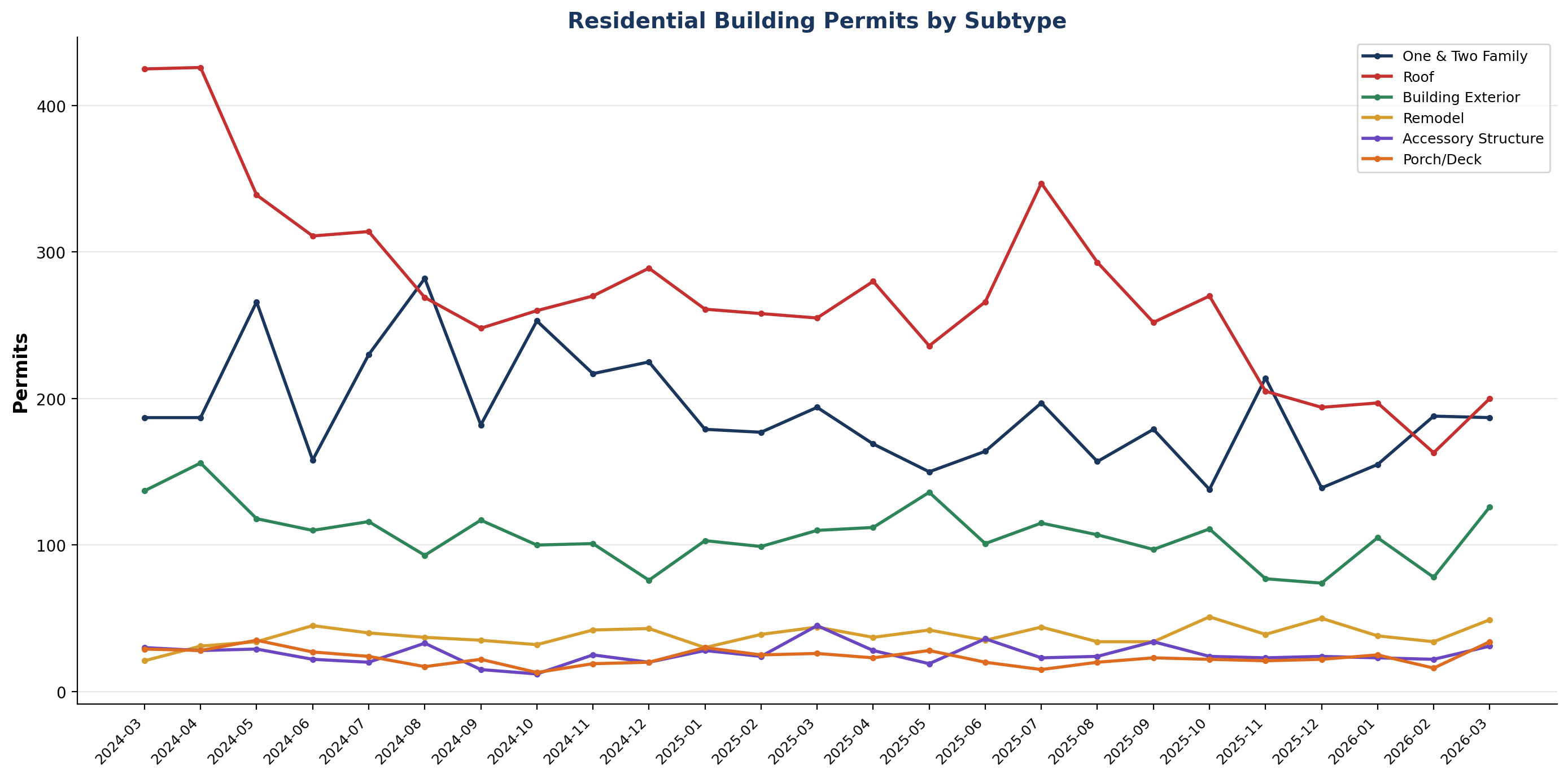
Commercial construction moved the opposite direction, up 19.1%. That’s a meaningful shift. When residential building slows but commercial picks up, it often signals that infrastructure and services are catching up to growth that already happened, or that developers are betting on the residents who are already here.
One category that stands out: plumbing permits surged 51.5%. That likely reflects a wave of existing homeowners investing in their properties as new construction slows. When you can’t build new, you renovate what you have.
Who’s Building
Three builders account for a disproportionate share of Palm Bay’s residential growth, and the rankings shifted significantly during this period.
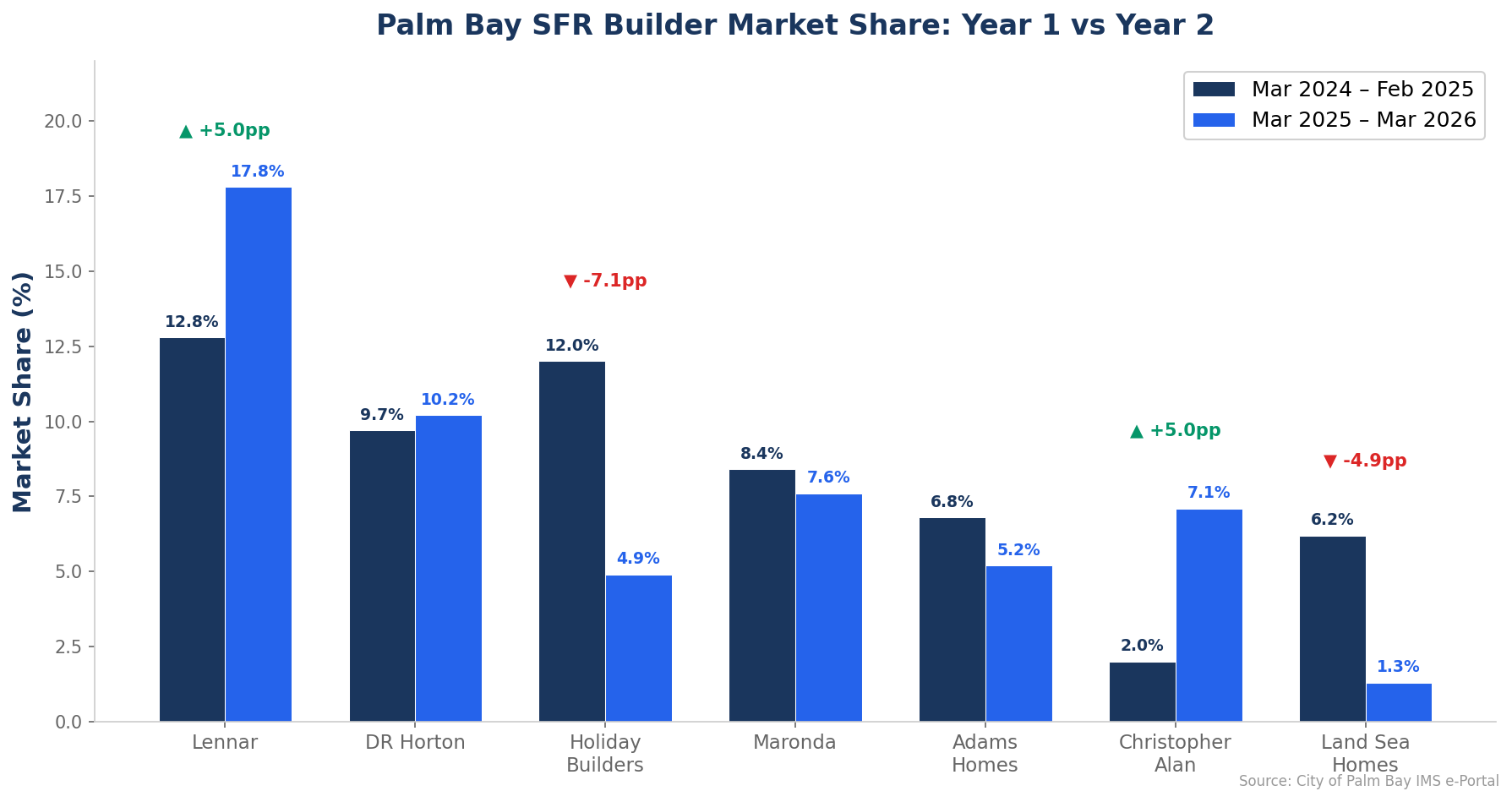
Lennar leads with 724 permits over 25 months, a 15.1% share of the single-family residential market, and gained roughly 5 percentage points during the analysis window. They’re the dominant builder in the city by a wide margin.
Holiday Builders pulled back sharply. They held about 12% market share at the start of the period and fell to roughly 5% by the end. That’s not a rounding error. It’s a significant retreat from the Palm Bay market.
Christopher Alan Homes went the other direction, tripling their permit output during the same window. For a mid-size builder to triple production while the overall market contracts is a notable bet on Palm Bay’s continued growth.
The divergence between Lennar’s growth, Holiday’s retreat, and Christopher Alan’s surge tells you something about which companies see a future here and which are pulling back.
Where the Permits Are Landing
Geography matters in Palm Bay, and the permit data reflects the city’s uneven development pattern.
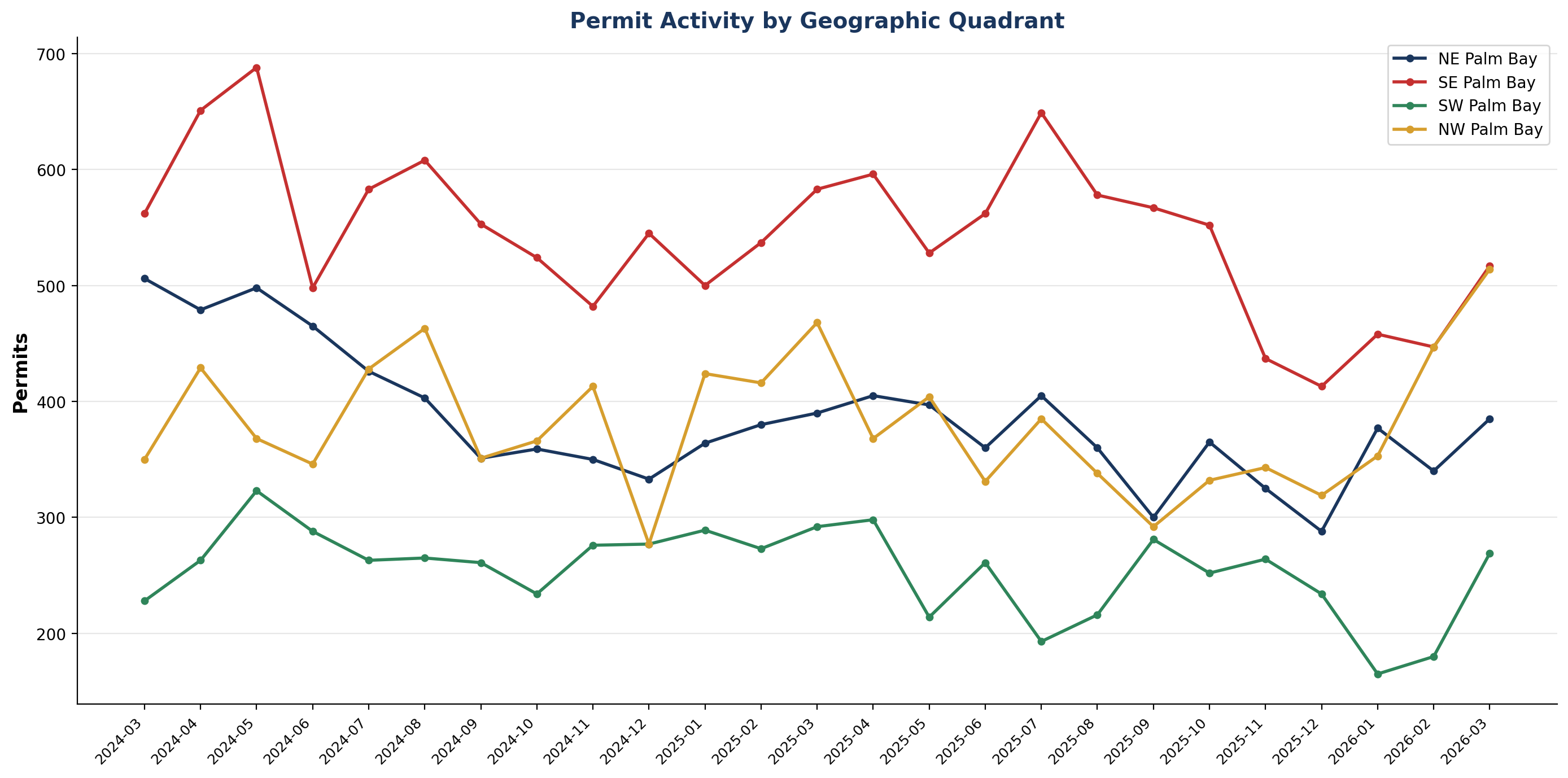
Southeast Palm Bay accounts for 35% of all permits issued over the 25-month period. That concentration reflects where developable land remains, where infrastructure has been extended, and where the large planned communities are still building out.
Northeast Palm Bay shows the steepest decline of any quadrant, down 11.8% year-over-year. The NE has historically been the older, more built-out part of the city. Fewer new lots, fewer new permits.
If your neighborhood is in the NE, the slowdown is more pronounced. If you’re in the SE, construction remains relatively active even as the overall pace moderates.
The LDC Question
In September 2024, the city adopted Ordinance 2024-33, a rewrite of the Land Development Code (LDC) that changed the rules governing how development gets approved and processed.
After that adoption, monthly permit averages ran about 13.5% lower than before. That is a fact the data supports. What caused it is a different question.
A correlation this clean is worth examining. The LDC rewrite added new requirements that could slow the pipeline from plan submission to permit issuance. The construction market also softened nationally during this period, driven by high interest rates and cooling demand. Both explanations fit the timeline. The data alone cannot separate them.
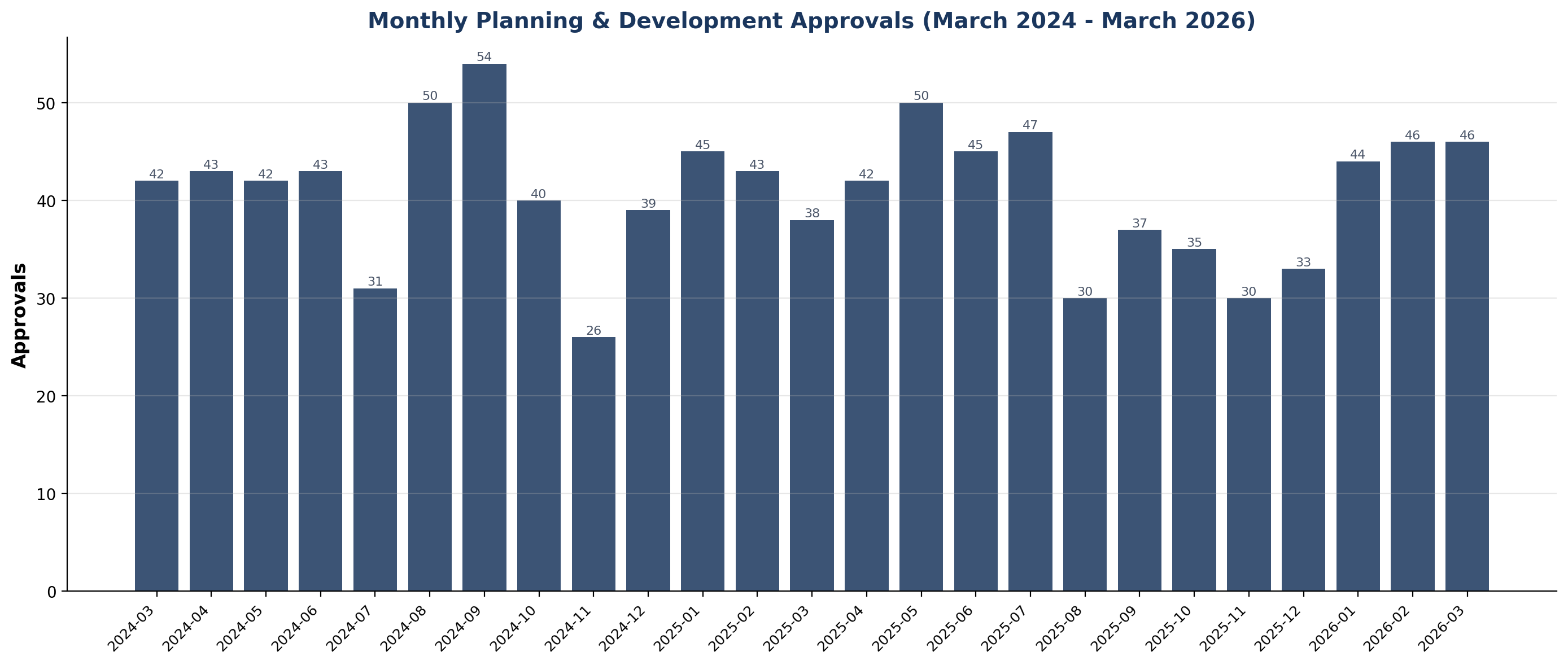
What the data does show is that the approval pipeline, the step before a permit gets issued, remains healthy. Pre-application meetings are running at 219 over the analysis period, with no meaningful decline. The city is averaging 41 new approvals per month. That suggests developers are still interested in building in Palm Bay. They just haven’t pulled permits yet.
What the Milestone Data Tells You
Of the 39,187 permits analyzed, 42.6% have reached final status, meaning the work is complete and inspected. Another 3.1% were withdrawn and 1.3% expired without completion. The remaining 53% are still active: issued and awaiting inspection, under review, or in progress.
The withdrawal and expiration numbers are relatively low, which suggests that most permits pulled in Palm Bay actually result in completed construction. That matters for infrastructure planning: a permit that expires doesn’t generate the traffic, demand for water, or road wear that a completed building does. With more than half the permits still working through the system and only 4.4% abandoned, the pipeline is producing real construction.
What Comes Next
The data points to stabilization rather than collapse.
The pre-application meeting count and the active approval pipeline suggest that the development community hasn’t abandoned Palm Bay. They’re still in the queue. The question is whether those approvals convert to permits and construction starts at the rate the city’s fiscal planning assumes.
March 2026’s partial recovery to 1,689 permits is a single month. It doesn’t establish a trend. But it’s the first month in the dataset that comes close to matching the same month a year earlier. If April and May 2026 hold similar numbers, the decline may have found its floor.
For residents, a construction slowdown means fewer new neighbors in the short term and potentially less pressure on roads, parks, and utilities that have been running to keep up with growth. It also means the city collects less in impact fees and permit revenue, which can slow capital projects.
The boom was always going to end. The question has always been whether the city used the revenue from those peak years to build ahead of the demand that was coming. The permit data can’t answer that question. The infrastructure plan can.
Sources
City of Palm Bay IMS Permit Database, March 2024 through March 2026 (39,187 permits, data analysis by The Palm Bayer)
Palm Bay Ordinance 2024-33, Land Development Code Rewrite, adopted September 2024


