


Listen to this article:
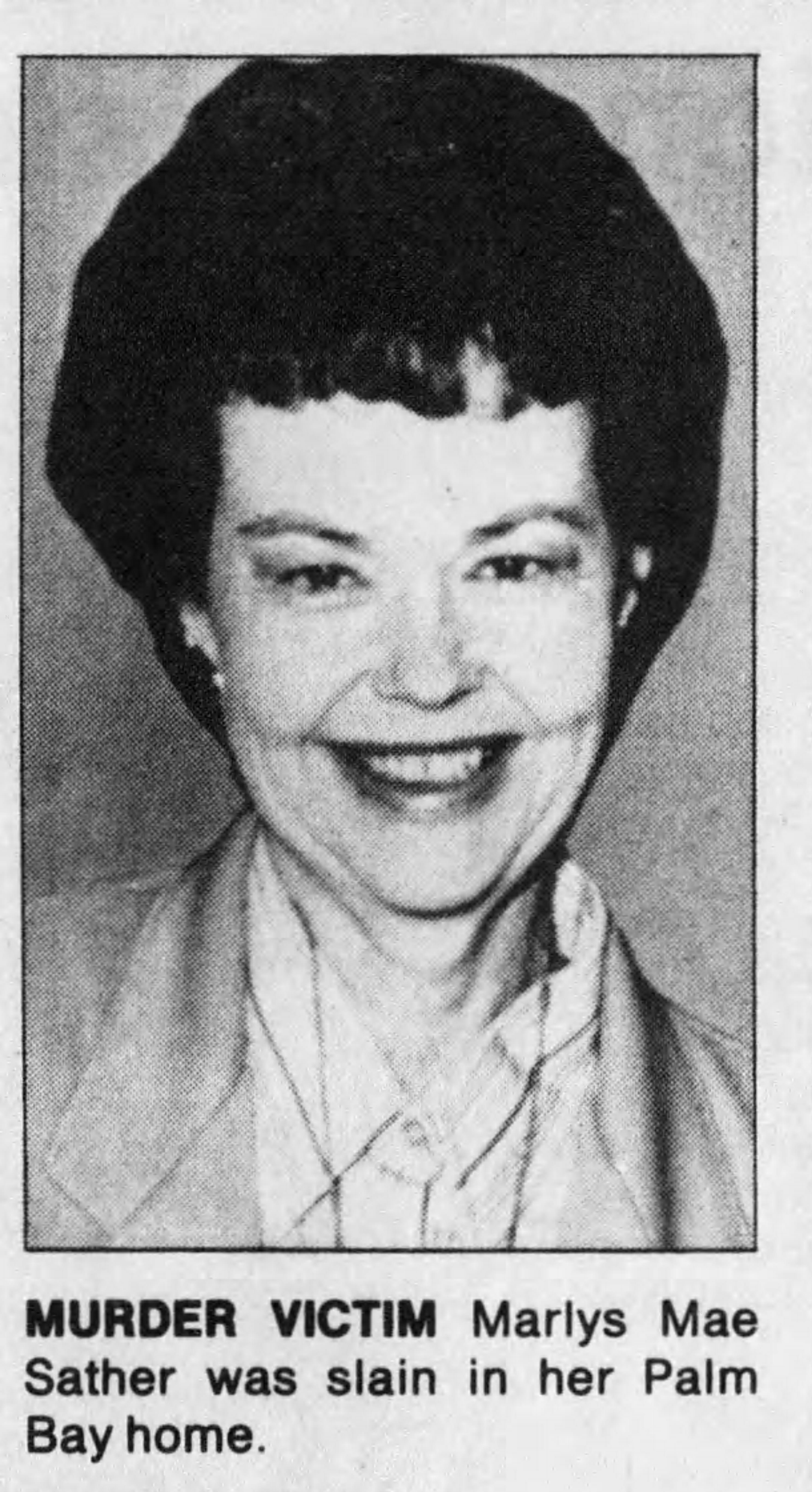
Palm Bay, FL -- Marlys Mae Bakke Sather, 56, left her job at Harris Corporation during her lunch break on September 5, 1990, and never came back. She was found later that afternoon bound, beaten, and burned in her home at 1340 Jarvis Street NW. Her next-door neighbor, Chadwick Scott Willacy, 22, had killed her. He has been on death row for 34 years. Governor Ron DeSantis signed his death warrant on March 13, 2026. The execution is scheduled for April 21.
No local outlet has covered this story with the detail it deserves. Florida statewide media picked it up and moved on. Marlys Sather deserves better than a dateline.
She Was One of Us
Marlys Sather moved to Palm Bay from Davenport, Iowa in 1985. She was a government contracts negotiator at Harris Corporation, a role she earned after putting herself through two college degrees later in life. She sang in the choir at First United Methodist Church in Melbourne. She was a member of the Sierra Club, the AAUW, and her neighborhood homeowners association. She had three children and three granddaughters.
Her husband, Rayland “Dick” Sather, had died of liver cancer in July 1990. Less than two months later, she was dead.
When she did not return to work after lunch that Wednesday, her employer called her family. Her daughter Diana went to check on her. She found her.
What Willacy Did
Willacy and Sather had argued before about the cost of lawn cutting. On September 5, he broke into her home. When she returned and found him there, he attacked her. He struck her multiple times in the head with a hammer and a squeegee, fracturing her skull. He choked her with an electrical cord. He bound her hands and ankles with wire and duct tape.
Then he left.
He took her ATM card and car keys, drove her car to a bank, and withdrew cash. He came back to the house, hid her car around the block, and made several trips moving stolen items to his own residence. A VCR, a television, and a shotgun were staged on her back porch for retrieval. He drove her car to Lynbrook Plaza, abandoned it, and jogged home.
Then he came back to her.
He disabled the smoke detectors. He doused her in gasoline. He placed an oscillating fan at her feet to feed oxygen to the flames. He set her on fire.
Medical examiner Dr. Charles Wickham confirmed she was alive and breathing when the fire was started. Soot recovered from her trachea proved she died from smoke inhalation, not from the prior beating.
This was not impulsive. He left, ran errands with her money, and came back. That sequence was central to the prosecution’s case.
The Investigation and Trial
Detective George Santiago led the investigation. Willacy’s then-girlfriend, Marisa Walcott, provided the tip that broke the case. Physical evidence was extensive: Willacy’s fingerprints on the fan and the gas can, Sather’s check register found in a trash can at Willacy’s residence, her jewelry and coins in his bedroom, and witnesses who had seen him driving her car.
Willacy was convicted of first-degree murder, burglary with assault, robbery, and first-degree arson on October 19, 1991. The jury voted 9-3 for death. Circuit Judge Theron Yawn imposed the death sentence on December 10, 1991.
The jury found four aggravating factors: the murder was committed during the commission of arson, for financial gain, to avoid arrest, and was especially heinous, atrocious, or cruel. A fifth aggravator, cold, calculated, and premeditated, was also established. The timeline alone makes that case. He left. He came back. He finished it.
Three Decades of Appeals
The Florida Supreme Court vacated the death sentence in 1994 and ordered a new penalty phase. A second jury heard the case in 1995 and voted 11-1 for death. The sentence was reimposed.
Willacy filed state postconviction motions, pursued federal habeas corpus through the Middle District of Florida, and challenged his sentence under the Hurst v. Florida ruling in 2018. Every court denied relief. The most recent filing, a pro se all-writs petition in the Florida Supreme Court, was denied in April 2023.
No active stay of execution or clemency petition is in place as of publication. Warrant-phase litigation is underway: a circuit court deadline falls April 2, 2026, with briefs to the Florida Supreme Court due shortly after. Courts have seen every argument. None has prevailed.
The Sixth Warrant of 2026
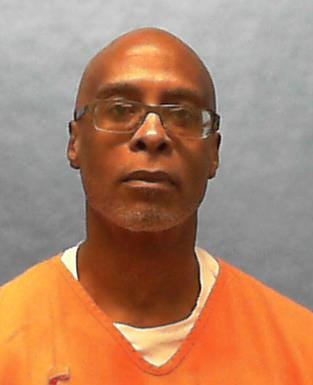
Willacy is DeSantis’s sixth death warrant of 2026. Florida executed 19 people in 2025, the highest single-year total in state history and more than any other state that year. The pace has not slowed.
Willacy has been at Union Correctional Institution in Raiford for 34 years. He will be transported to Florida State Prison in Starke for the April 21 execution at 6:00 PM.
Why This Matters to Palm Bay
The crime happened here. Local detectives worked the case. A Palm Bay woman was murdered in her own home by her own neighbor, a man who stopped in the middle of what he was doing, ran an errand with her money, and came back to kill her.
The statewide wire story gives you the headline. It does not give you Marlys Sather: the choir soloist, the grandmother, the woman who earned two degrees while working full-time, the widow of two months.
Her daughter Diana still lives in Melbourne. Her family has spent 35 years watching this case move through courts.
April 21 is five weeks away.


